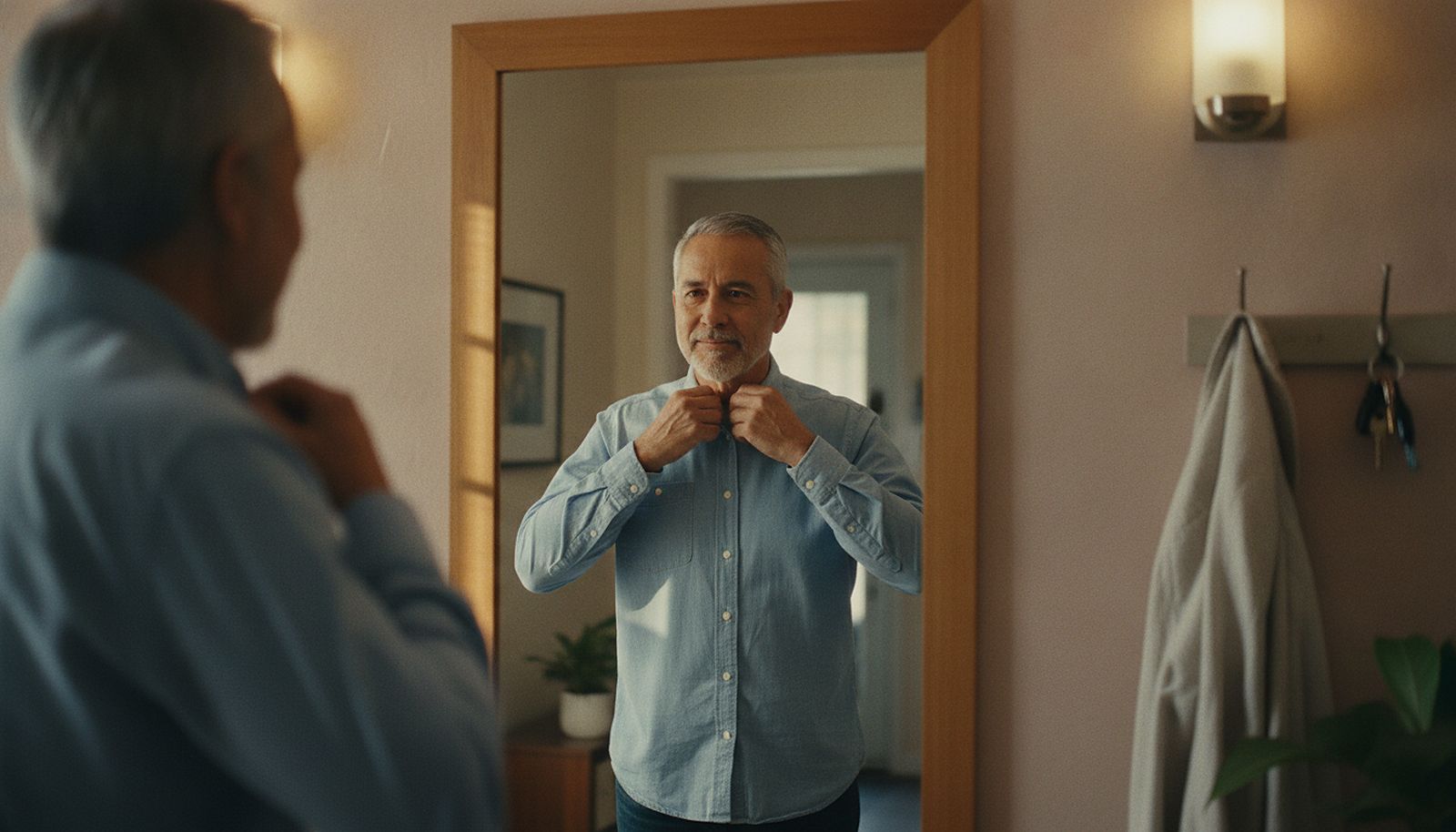
Dating in Your 50s as a Man: A Realistic Guide for 2026
Dating in your 50s as a man is easier than you fear and harder than the ads promise. A 61-year-old widower on mistakes, profiles, and where to actually meet.
Dating after 50 works differently than it did at 30 — and mostly, it works better. You know what you want, you can spot a bad match in one coffee, and you are not building a life from scratch with a stranger. You are inviting someone into a life that already stands on its own. That changes the questions you ask, the pace you set, and the nonsense you no longer tolerate. This hub is the map: where to start, what to expect, and what to skip.
Dating over fifty works best as a deliberate project, not a lottery. Start with a mindset reset, not a profile: know what you want and what you're done tolerating. Then combine one dating app with one real-world activity, move at your own pace, and expect the first good match within months of consistent effort — not days.
Dating in your 50s as a man is easier than you fear and harder than the ads promise. A 61-year-old widower on mistakes, profiles, and where to actually meet.
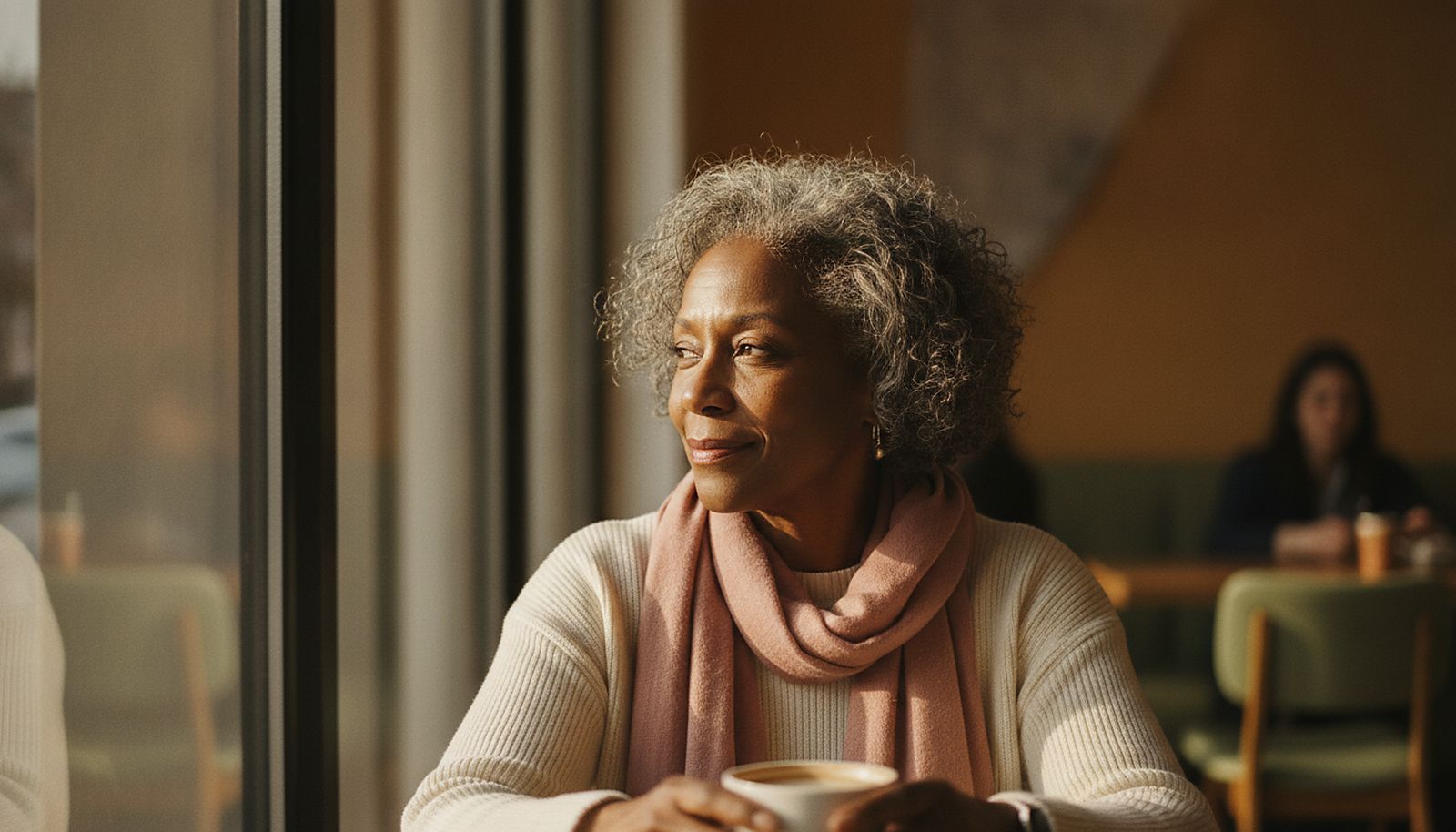
Dating for women over 50, told straight: what the numbers really say, what attracts good men now, the red flags to watch, and where to meet people offline.
Dating over fifty is one of those things everyone has an opinion about and almost nobody explains properly. You get either doom (“the good ones are taken”) or cheerleading (“it’s never too late!”), and neither tells you what to actually do on a Tuesday. This is the guide we wished existed when each of us started over — one of us after a divorce at 53, the other widowed at 58. It covers the mindset that makes the rest possible, the honest case for online versus offline, a week-by-week plan for your first two months, what men and women can each realistically expect, safety, and the pacing questions everyone wonders about but rarely asks out loud.
The most common mistake in after-50 dating is starting with the app download. The profile is step four. Steps one through three happen in your own head, and skipping them is why so many people quit within a month.
Step one: decide what “success” means. A spouse? A companion for dinners and travel? Someone to love without merging households? All are legitimate. But they lead to different choices, and not knowing which one you’re pursuing means you’ll evaluate every person against a blur.
Step two: take inventory without flinching. What ended your last chapter — divorce, loss, long singleness — left residue. You don’t need to be “fully healed” (nobody is), but you need to know what you’re carrying. If most sentences about your ex still end in an exclamation point, give it more time. Our five-minute readiness quiz is a blunt but kind way to check.
Step three: write your two lists. Five things you genuinely need in a partner. Five things you’re permanently done tolerating. Keep both short and honest — “kind, solvent, wants what I want” beats a wish list of thirty adjectives. A Senior List survey from late 2024 found that mature singles who know what they want report more satisfaction with dating, not less. Standards are not the obstacle. They’re the strategy.
Then, and only then, the profile.
| The Pattern (from fear) | The Shift (from wisdom) |
|---|---|
| Waiting until you feel “completely ready” | Starting at 70% ready — readiness is built by doing, not waiting |
| Treating every date as an audition you might fail | Treating every date as mutual research over coffee |
| Hiding your age, history, or reading glasses | Leading with the true version — it’s who they’d actually be dating |
| Rushing to fill the empty chair at the table | Following the 3-3-3 pace: three dates, three weeks, three months |
| Quitting after one bad month | Committing to a six-month experiment with a weekly rhythm |
| Taking mismatches as evidence you’re too old | Taking mismatches as data and moving on |
Two terms you will meet everywhere in this territory, defined once so we can stop explaining them.
Gray divorce refers to a marriage that ends after age 50. Among married adults over 50 the divorce rate roughly doubled between 1990 and 2015, and roughly tripled for the over-65s — which is the main reason the over-50 dating pool keeps refilling.
Cohabiting after 50 — living together without marrying — is now the fastest-moving arrangement in this age group: about 4 million adults over 50 were cohabiting in 2016, up 75% in under a decade.
The 3-3-3 rule is a pacing guideline: about three dates before deciding whether to keep exploring, three weeks before judging real potential, three months before commitments like exclusivity or family introductions.
Both — but in a specific ratio, and for different jobs.
The honest case for online. About one in six Americans 50 and older — 17% — has used a dating site or app, and among people in their 50s it is 23%; per Pew Research, Match is the most popular platform among users 50 and up, with about half of over-50 app users explicitly seeking a long-term partner. That’s the good news: the people there are largely serious. Apps give you volume and reach no book club can match, especially in smaller towns.
The honest case against relying on it alone. Pew also found 57% of women over 50 rated their online dating experience negative (versus 38% of men). Apps reward speed and photos; our age group runs on conversation and repetition. Online is a search tool, not a habitat.
The offline advantage. Hobby groups, volunteering, classes, and friend-of-friend introductions let attraction develop at human speed, with character visible before chemistry is demanded. The tradeoff is lower volume and slower results.
Our recommendation: the 1+1 rule. One app, worked twenty minutes a day — not two hours of doomswiping. Plus one recurring real-world activity you’d enjoy even if you never met anyone there. App-only daters burn out; activity-only daters wait years. The combination is where nearly every success story we know comes from.
Margaret’s note: Women, the 57% statistic is about the tool, not about you. My first month online was genuinely awful — and then I rewrote my profile to sound like me instead of a résumé, restricted apps to coffee-scheduling only, and moved real conversation offline fast. The experience flipped almost overnight. The app is the doorway, not the room.
Vague intentions die; schedules survive. Here’s a realistic on-ramp.

Two months of this beats two years of “I should really get out there.” And if the first weeks bring up more grief or old anger than you expected, that’s not failure — that’s information, and the starting-over resources exist for exactly this stage.
The mechanics are shared; the experience is not. It’s worth knowing both sides.

If you’re a woman: expect early attention volume with mixed quality — flattering for a week, tiresome after. Your work is filtration: screening for emotional availability, believing red flags the first time, and refusing the old be-agreeable programming. The full picture — what actually attracts good men now, red flags with a woman’s eye, and where to meet men beyond apps — is in our guide to dating over 50 as a woman.
If you’re a man: expect the opposite problem — a slower start, fewer responses, and the discovery that women this age screen hard for emotional honesty, not résumés. Your work is initiative plus patience: better messages, real questions, no bitterness about exes. The specifics — profiles that get responses, what women over 50 actually screen for — are in dating in your 50s as a man.
What you’ll both find: everyone has history, and the question is whether it’s carried well; intentions surface faster than they did at 30; and the person across the table is almost always as nervous as you are, however composed they look.
Tom’s note: Men, one thing from a widower who started at 58: your job in the first month is not to impress anyone. It’s to become someone who can talk about his life — including the sad parts — in complete sentences without either performing or unloading. I practiced on my brother before I practiced on dates. Sounds ridiculous. Worked.
This section is short because the rules are simple; they just have to be non-negotiable.
None of this is fear. It’s the same seatbelt logic you’d insist on for anyone you love.
The pacing questions get whispered more than any others, so here are straight answers.
Kissing: there is no over-50 schedule. Some couples kiss on date one; plenty wait weeks. The only rule that matters is mutual, actual desire — not obligation, not “it’s been three dates so I suppose.” And anyone who sulks or pressures when you’re not ready has failed the cheapest character test available.
A useful brake — the 3-3-3 rule: about three dates to decide whether to keep exploring, three weeks before judging serious potential, three months before big commitments like exclusivity, meeting adult kids, or blending calendars. It’s a guideline, not scripture, but it counters the most common after-50 error: rushing to fill an empty chair. Loneliness makes ninety-day decisions feel urgent in nine days.
Exclusivity: whoever wants clarity first gets to ask. “Are we still seeing other people?” is a fair question from either side by month two or three.
Intimacy: on your timeline, with honest conversation beforehand — including the unglamorous topics of health and expectations. Bodies at 55 are not bodies at 35, and the couples who thrive are the ones who can laugh and talk about that, not the ones who pretend.
The overall tempo: slower than your loneliness wants, faster than your fear prefers. If a connection is real, unhurried pacing costs nothing. If it can’t survive patience, it wasn’t the thing you were hoping it was.
The biggest obstacle to dating over fifty usually isn’t the pool, the apps, or your age — it’s a small set of quiet expectations that disqualify good people before coffee arrives.
The usual suspects, from our own histories and a few hundred conversations since:
None of this means settling. It means aiming your standards at character, where they pay, instead of at fantasy, where they cost. Our guide to the new rules of dating over 50 as a woman goes deeper on rewriting the old rulebook deliberately.
The red flags after 50 are rarely subtle — people this age tell you who they are quickly, and the skill is believing them the first time instead of starting a renovation project.
The list we’d hand a friend:
And the quietest flag: your own body relaxing when they cancel. Trust it. “I don’t think we’re a match” is a complete sentence, and no flag on this list requires a second chance to confirm.
Dating after fifty rewards exactly the qualities this stage of life gives you: clarity about what you want, low tolerance for nonsense, and the resilience of someone who has already survived hard chapters. Start with the mindset work, run the 1+1 combination of one app and one real-world habit, follow the eight-week on-ramp, and let the 3-3-3 rule pace you past loneliness-driven mistakes. The pool is enormous — nearly 3 in 10 US adults in their 50s are single — and the people in it are more serious than they’ve ever been. You don’t need luck so much as a system and six honest months. Everything else in this hub exists to help you build both.
This guide is written and kept current by both editors — Margaret Hale, divorced at 53, and Tom Reyes, widowed at 58. Every figure above links to the study it came from; the full list is on our sources page, and how we choose and read a study before citing it is set out in our editorial policy. Spotted an error? Contact us and we will fix it.
We write these guides as two people actually doing this. Margaret came back to dating at 54 after a 27-year marriage ended; Tom started over at 59 after losing his wife. Between us we have made most of the mistakes you are worried about making, and survived all of them. The guides below cover getting started, online versus real-world dating, what men and women over 50 actually want, and staying safe while you find out.
Harder than at 30, easier than the folklore claims. Nearly 3 in 10 adults in their 50s are single, and Pew Research finds about half of over-50 app users want a long-term partner. The difficulty is mostly logistical — smaller local pools, rustier habits — and both respond well to a deliberate approach.
A pacing guideline: roughly three dates to decide if you want to keep exploring, three weeks before judging real potential, three months before major commitments like exclusivity or introducing family. It's not a law — it's a brake on loneliness-driven rushing, which is the most common over-50 dating mistake.
The honest answer: the first two months are the hardest, because everything is rusty at once — flirting, profiles, rejection. After that it gets markedly easier. People who treat it like a skill to rebuild, with a steady weekly rhythm, consistently report better experiences than those waiting to feel ready.
Genuinely good, if you participate actively. Nearly 3 in 10 adults in their 50s in the US are single, intentions are clearer at this age, and selectivity correlates with satisfaction according to a late-2024 Senior List survey. Most success stories involve six to eighteen months of consistent, unhurried effort.
Whenever both of you actually want to — for many couples that's date one or two, for others week four. There is no age-appropriate schedule. The only real rule: desire and comfort must both be present, and anyone who pressures past your pace has told you everything you need to know.
No, and the numbers say the opposite. Pew Research finds 23% of Americans in their 50s have used a dating site or app, and Match is the most popular platform among users over 50. People start over at 55, 65, and 75 every day. The pool is not the problem; waiting is.
Yes, provided you want one and act like it. Pew Research finds about half of dating-app users over 50 are explicitly seeking a long-term partner, and nearly 3 in 10 US adults in their 50s are single. What kills realism isn't age — it's expecting instant chemistry, a partner with no history, or results without consistent effort.
The reliable ones: fresh anger about an ex years later, rushing intimacy or commitment within weeks, vagueness about their life and finances, never introducing you to anyone they know, and any request for money. One flag means pause and watch; two or more means leave kindly and quickly, without negotiating.
Yes — and the numbers back it up. Nearly 3 in 10 adults in their 50s are single, and Pew finds about half of older dating-app users want a long-term partner. People form serious, lasting relationships in their 50s, 60s, and beyond every day. The question is not whether it is possible, only whether you want it.
Most do. Pew research shows roughly half of dating-app users over 50 are explicitly seeking a long-term partner, and men who have been married before generally liked being partnered. What men in their 50s avoid is drama and pressure — but commitment itself is usually the goal, not the fear.
The big ones: anyone who asks for money or financial details, refuses to video-call or meet, pushes intense declarations within days, drinks heavily on early dates, or speaks with contempt about every ex. One awkward moment is human; a pattern of secrecy, rushing, or bitterness is your answer.
Combine channels: an honest, current profile on one or two apps, plus real-world activity — classes, volunteering, telling friends you are open to introductions. Move good conversations to a short first meeting within a week or two. Aim for consistency over intensity: a couple of dates a month beats a frantic burst followed by burnout.